
There is a question Michael Ruge has heard many times during his years in real estate development: if a project makes sense, why would a bank say no?
The answer is usually not that the project is bad.
Banks simply look at risk differently from developers.
A developer can look at a piece of land and see what it could become. There may be an opportunity to assemble several properties, secure approvals and eventually create much-needed housing. A bank, however, has to look at what exists today.
Is there predictable cash flow? Are market conditions stable? How much of the project has already been de-risked? Are approvals in place?
If too many boxes remain unchecked, traditional funding can become difficult.
That is where Michael Ruge believes private capital can play an important role.
Why conventional funding can fall short
 Real estate development has an awkward financing problem. A tremendous amount of value can be created before a building generates a dollar of income.
Land needs to be acquired. Planning has to happen. Consultants need to be paid. Municipal approvals have to be pursued. Engineering work, studies and design can all require money long before construction begins.
Banks tend to prefer certainty, while early-stage development is full of moving parts.
In Canada, developers may also face extensive documentation requirements, conservative loan-to-value limits and lengthy approval processes. Add changing interest rates or delays at the municipal level, and even a project that started with conventional financing can suddenly find itself under pressure.
Michael does not blame banks for being banks. Their job is to protect their capital and manage risk.
The problem is that real estate development still needs funding during the stage when traditional lenders are least comfortable providing it.
Where private lenders fit
Michael’s approach is to use private capital at the front end of suitable projects.
That early-stage funding can help with land assembly, planning, entitlements and moving a project towards the point where a larger developer, institutional lender or government-backed financing source becomes interested.
It fills a very specific gap.
Private investors are not simply arriving after all the difficult work has been done. Their capital can help create the conditions that make later-stage financing possible.
For Michael, that distinction matters.
The investor is helping advance the project while value is still being created.
How Michael Ruge structures the funding
The model described by Michael uses investments in increments of $250,000 structured as loans to the development.
Those loans are secured directly against the underlying asset and earn 10 per cent annually, compounded each year during the loan period.
When the project reaches the appropriate next stage, the intention is for the lender to receive their original principal, the accumulated interest and, depending on the project, an additional performance dividend.
Michael’s philosophy is simple: focus first on the return of the investor’s money and then on the return on that money.
It is a small change in wording, but a significant change in priorities.
Looking beyond the first payout
In some projects, the relationship does not necessarily end when the original loan is repaid.
Michael describes structures where a private lender may retain a small ownership position in the completed building, commonly in the 1 to 5 per cent range depending on the project.
That can potentially provide continued participation in the property’s future performance after the original capital has been returned.
It is part of what Michael calls long-term thinking.
The goal is not simply to complete one transaction and move on. It is to look at how funding, development and ownership can work together over time.
Why this matters for housing
There is also a much bigger reason to have this conversation.
Housing needs capital.
It is easy to say that Canada needs more homes. Turning that need into real estate development requires money at every stage.
If traditional lenders are best suited to projects once much of the risk has been removed, somebody still needs to finance the work that gets those projects to that point.
Private funding can be one answer.
It does not replace banks, government programmes or institutional investors. It fills a gap between them.
After decades in real estate development, Michael Ruge has learned that getting projects built is rarely about finding one perfect source of money.
It is about using the right funding at the right stage.
And sometimes, the opportunity begins precisely where the bank becomes uncomfortable.
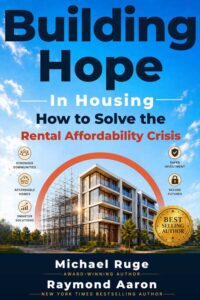
Michael Ruge’s new book “Building Hope in the Housing – How to Solve the Rental Affordability Crisis” will be realeased this fall (2026).
Links to Michael Ruge, Affordable Apartments and his Initiatives:
Can Private Capital Help Solve the Housing Crisis? Michael Ruge Thinks It Has a Role
Green Belts Forever – Michael Ruge’s Plan to Save the Countryside
Michael Ruge’s Vision for the Future – Affordable Housing for Everyone
Building Hope in Housing: Why Michael Ruge Believes the Housing Crisis Can Be Solved