What does it actually take to get housing built in Canada?
That sounds like a simple question.
It isn’t.
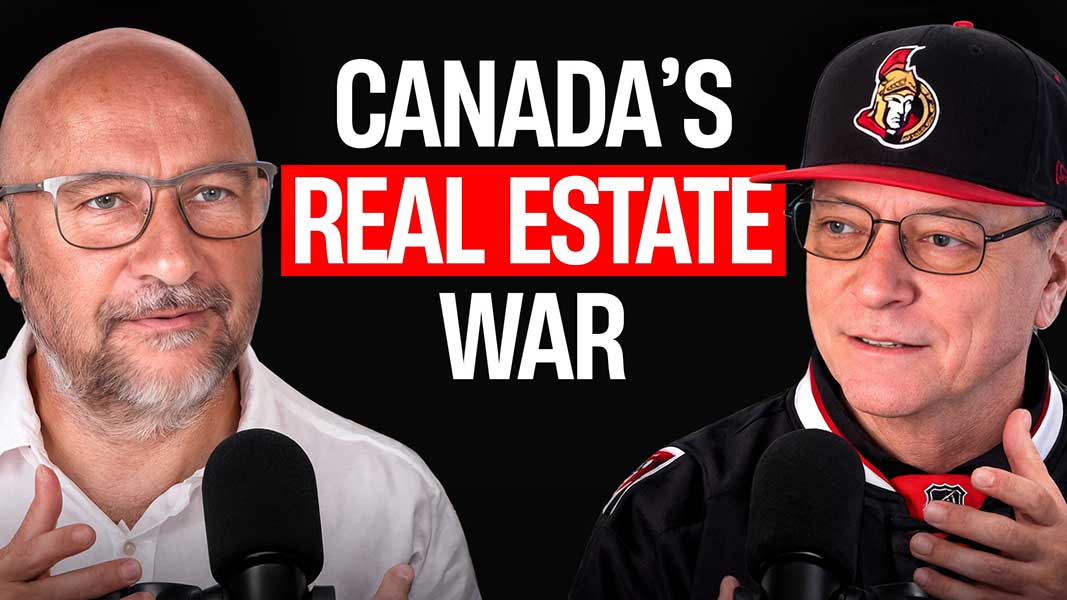
I sat down with Bruce Firestone to talk about real estate development, difficult deals, bureaucracy, zoning and some of the practical ideas that could help us address Canada’s housing crisis.
Bruce has seen the development business from an unusual number of angles.
He is an entrepreneur and developer. He founded the Ottawa Senators. He helped navigate the development of the arena originally called the Palladium, now the Canadian Tire Centre.
His experiences give him plenty to say about what works and what doesn’t.
And despite some of the frustrating stories, I came away from our conversation optimistic.
Why?
Because many of the problems we discussed are things people can actually change.
Start with time
Bruce’s arena project provides an extraordinary example.
It took about five and a half years to get through the approval process.
Construction took approximately 28 months.
That comparison should make anybody interested in the housing crisis think.
What happens if a similar pattern affects housing?
What happens when projects spend years navigating planning and approvals before construction can properly move?
Time becomes part of the cost of housing.
That is why improving the development process deserves to be part of the affordability conversation.
Look at the costs people don’t see
Bruce also talked about the fees and studies developers can face before groundbreaking.
On large projects, those costs can reach millions.
Again, those expenses happen before anybody sees construction.
They are invisible to most future residents.
But they are not invisible to the project’s finances.
If we want more affordable housing, we should understand every stage where costs are created.
That includes the period before construction.
Rethink zoning where it makes sense
The next opportunity is land use.
Canada cannot manufacture unlimited new urban land.
So we need to ask whether the land we already have is being used as effectively as it could be.
That does not mean turning every neighbourhood into a wall of towers.
It means allowing ourselves to consider more options.
Mixed-use communities.
Smarter density.
Secondary suites.
Multigenerational housing.
These can all be part of the conversation.
Make one house capable of doing more
Bruce gave one of the simplest examples.
Take a new two-storey home with a basement.
Design the basement with suitable independent access and it may be possible to create a two- or three-bedroom apartment.
Now the property can house more people.
Maybe grandparents live there.
Maybe an adult child comes home with children of their own.
Maybe it becomes a rental suite and helps the homeowner pay the mortgage.
It is not a complicated concept.
But it is exactly the kind of practical thinking we need.
Encourage creativity
Bruce uses the term real estate animation for finding ways to add additional uses and revenue streams to property.
I like the principle because it forces you to look at real estate differently.
Instead of asking only what a property is, ask what else it could become.
Entrepreneurs do that naturally.
Bruce talked about how people become creative when they are backed into a corner.
Canada’s housing crisis has backed us into a fairly serious corner.
So let’s get creative.
Persistence is part of the answer too
Ideas alone do not build housing.
You have to execute them.
You will encounter roadblocks.
Plans will change.
Approvals will take longer than expected.
People will tell you something cannot be done.
Bruce jokingly calls me a magician because he has watched me work through situations where the available options did not look particularly good.
My answer is always the same.
It isn’t magic.
It’s persistence.
There is usually another way.
The trick is staying engaged long enough to find it.
Stop treating every participant as the enemy
Developers cannot solve the housing crisis alone.
Neither can municipalities.
Neither can investors, builders or homeowners.
We need these groups working together.
That does not mean they will always agree.
Good development requires debate.
But debate should ultimately lead somewhere.
When everybody becomes locked into protecting their own position, housing does not move.
We need more problem solving.
Michael Ruge believes Canada’s housing crisis can be addressed
I am optimistic because the conversation with Bruce highlighted practical opportunities rather than imaginary ones.
We can examine approval timelines.
We can look carefully at development costs.
We can rethink zoning where appropriate.
We can create more secondary suites.
We can build thoughtful mixed-use communities.
We can encourage developers to find creative ways to make land work harder.
And we can improve the relationship between the people building housing and the people responsible for regulating it.
None of those changes alone will solve Canada’s housing crisis.
Together, they can move us in the right direction.
Housing is ultimately about people having somewhere to live.
The systems surrounding development should help us reach that outcome.
Canada has the talent, the land, the entrepreneurs and the need.
Now we have to keep finding ways to get the housing built.
Michael Ruge’s new book “Building Hope in the Housing – How to Solve the Rental Affordability Crisis” will be realeased this fall (2026).
Links to Michael Ruge, Affordable Apartments and his Initiatives:
The Housing Crisis We Built – And How We Can Fix It Together
Funding Real Estate Projects Made Simple – A Chat with Michael Ruge
Passive Income Forever – Michael Ruge’s Unique Funding Model
Why Location Matters in Funding Real Estate Projects with Michael Ruge