Duplexes, triplexes, and the death of the single-family-only zone
Raise your hand if you’ve ever driven past a beautiful old Victorian house and thought, “That’s way too big for one family.”
You’re not wrong. In most Canadian and UK cities, those grand old homes sit empty upstairs while young families cram into basement apartments. It’s a strange kind of waste.
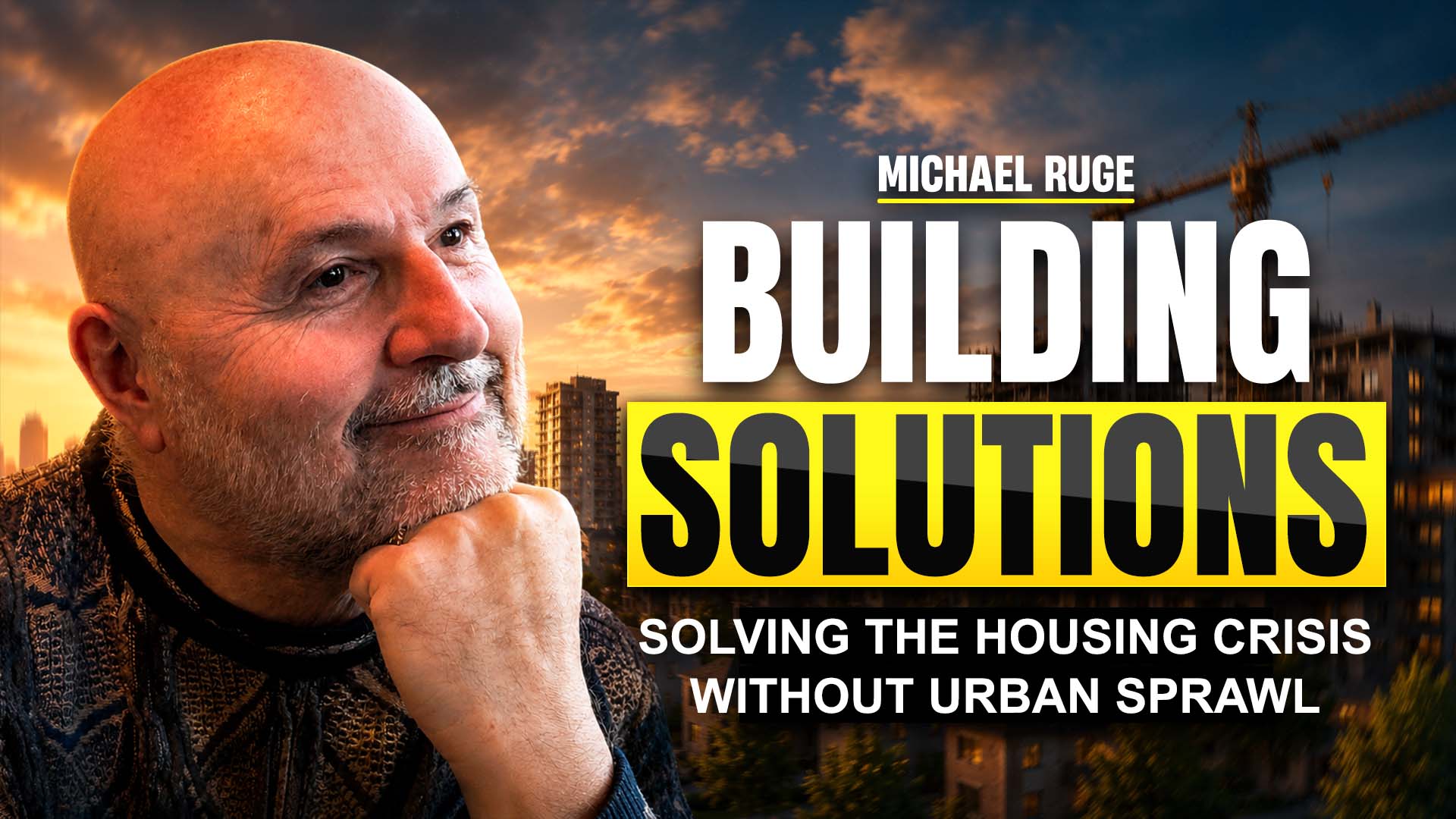
Michael Ruge wants to fix that by bringing back the “missing middle.” No, it’s not a new political party. It’s the type of housing we forgot to build for fifty years: duplexes, triplexes, townhouses, and low-rise walk-ups.
Why sprawl became the default
Let’s take a quick history lesson. After World War II, both Canada and the UK went on a suburban building spree. The dream was a single-family house with a yard, a car, and a picket fence.
But somewhere along the way, we made it illegal to build anything else. Zoning codes locked in “single-family only” across huge swaths of our cities. Apartment buildings were banished to a few busy corridors.
The result? Urban sprawl exploded. Cities grew outward because they couldn’t grow anywhere else. And the housing crisis followed close behind.
The missing middle is the magic middle
So what does the missing middle actually look like?
Picture a street of single-family homes. Now imagine that every third house is replaced with a triplex—three homes stacked in a building that looks almost identical to the original house. Same roof line. Same front porch. Same garden out back.
Michael Ruge loves this because it doubles or triples density without changing the character of the neighbourhood. “You wouldn’t even notice the difference driving down the street,” he says. “But suddenly three families have a home instead of one.”
And because you’re building on existing lots, there’s zero urban sprawl. No farmland lost. No new roads. Just more neighbours.
The affordability angle
Here’s where it gets really good. Missing middle homes are generally cheaper than single-family houses because the land cost is shared.
A triplex on a $1.2 million lot might have three units worth $500,000 each. That’s still not cheap, but it’s much more attainable than a $1.2 million detached home. And for renters, a unit in a triplex often costs less than a high-rise apartment because there are fewer amenities (and no elevator repair bills).
Michael Ruge argues that legalizing the missing middle is the single fastest way to ease the housing crisis without spending a dime of government money. “Just change the zoning,” he says. “The private market will do the rest.”
Real-world success stories
This isn’t theory. Montreal legalized the missing middle city-wide in recent years, and the results have been remarkable. Rents are still high (it’s a popular city), but vacancy rates have improved, and neighbourhoods have stayed vibrant.
Portland, Oregon (just south of the Canadian border) legalized duplexes on every residential lot, and thousands have been built. No sprawl. No backlash. Just more housing.
Michael Ruge is advising several UK councils on similar reforms. “The appetite is there,” he says. “We just need politicians to be brave.”
A happier, walkable future
Here’s the human payoff. Missing middle neighbourhoods are walkable. They support corner shops, cafes, and transit. They’re not car-dependent wastelands.
When you build a triplex, you get three families who can walk to the bus stop. When you build a single-family house, you get one family that needs two cars. The math is simple.
Michael Ruge smiles when he talks about this. “The missing middle isn’t about cramming people in. It’s about letting people stay in the neighbourhoods they love. That’s not density. That’s dignity.”
Links to Michael Ruge, Affordable Apartments and his Initiatives:
Canada’s Housing Crisis and a Path Back to Ownership
Michael Ruge and Affordable Apartments: Transforming the Cowichan Valley’s Housing Market